Tag: MMOexp

  • Foundational Balance Considerations

    Foundational Balance Considerations

    Today, I’d like to engage in a discussion regarding fundamental aspects of the game that may require adjustments in terms of balance. My belief is that many facets of the game, such as class and weapon balance, are intricately linked to the game’s core systems. By scrutinizing these fundamental mechanics and features, we can offer the developers more precise insights into balancing the game effectively.

    Here are some topics that I consider relevant for discussion, although I’m sure you can come up with additional ones. Keep in mind that these discussions should revolve around the systems these elements are embedded in, rather than focusing on specific classes, weapons, or abilities.

    • The base movement speed of all players and enemies.
    • The inherent attack speed of all weapons.
    • Penalties for equipment affecting movement speed.
    • Should the inventory have a weight mechanic that impacts your mobility?
    • The speed of equipping and unequipping items.
    • The speed of interactions, such as opening chests and doors.
    • Considerations for sound design, including ambient audio levels.
    • Spell recovery mechanics.
    • The impact of map design features, such as the abundance or scarcity of doors and archways.
    • The speed and functionality of zone closing or zone-related mechanics.
    • Affixes on items, particularly those that may be either undesired or highly sought after by all players.

    In this game, like in any other, the meta isn’t solely determined by the strength of individual characters, but by how well those characters can exploit the fundamental features of the game. For instance, if everyone moves too slowly, the character best suited for dealing with slow targets or excels while moving at a slower pace may become the top choice. Similarly, if the game features an excessive number of doors or they take too long to open, the class that can most effectively utilize doorways could emerge as the strongest.

    Feel free to share your thoughts on which core features should be adjusted and your overall experiences with these game features.

    Some aspects I find particularly intriguing include: What would be the impact of increasing everyone’s movement speed by 50%? How would the game change if every weapon swung 50% faster? Should the time required to open chests be reduced from 3-6 seconds to 1-3 seconds? And should the concept of a closing zone even exist in the game?

    Of course, many players choose to buy Dark and Darker Gold from MMOEXP to make themselves and their teams stronger and to have a favorable position in the game.

  • Unleashing the Power of FC 24: A Comprehensive Guide to Play Styles

    Unleashing the Power of FC 24: A Comprehensive Guide to Play Styles

    Are you intrigued by the magical transformation of a simple shot into a stunning banger? Do you aspire to skillfully navigate through opponents on the field but find yourself clueless about the secrets behind it? Fear not, as we delve into the newly introduced play styles in FC 24, unlocking the mysteries and providing you with the top five play styles for each position. By the end of this guide, you’ll be equipped with the knowledge to make confident player selections, enhancing your gameplay and strategic prowess.

    Center Backs
    The defensive backbone of any team, center backs require rock-solid skills to thwart opponents. Here are the top five play styles for center backs:

    Aerial Play Style: Players with this style boast higher jumps and improved aerial physical presence, making them formidable defenders against crosses and chips.

    Intercept Play Style: Center backs equipped with this style excel at cutting off passing lanes, denying opponents crucial opportunities.

    Jockey Play Style: Despite potential slowing down, the jockey play style allows defenders to maintain extreme speed, especially crucial in one-on-one situations.

    Bruiser Play Style: For those who relish physical challenges, the bruiser play style provides a significant advantage over attackers, enabling effective shoulder challenges.

    MP Center Back Play Style: Anticipate play style ensures a higher success rate with standing tackles, allowing the center back to recover possession seamlessly.

    Wing Backs
    Wing backs play a crucial role in both defense and offense. Here are the top five play styles for wing backs:

    Anticipate Play Style: Ideal for tackling wingers without risking mistimed tackles, improving defensive capabilities.

    Rapid Play Style: Enhances sprint speed while dribbling, making wing backs uncatchable and effective when exploring wider spaces.

    Bruiser Play Style: Physical dominance over attackers on the wing, crucial for defensive wing backs.

    Quick Step Play Style: Provides a Nitro boost for the first step, aiding in quick sprints and sharp turns.

    Whip Pass Play Style: Perfect for attacking wing backs, improving the accuracy, speed, and curve of crosses, leading to goal-scoring opportunities.

    Central Defensive Midfielders (CDMs)
    CDMs require a blend of defensive prowess and stamina. Here are the top five play styles for CDMs:

    Relentless Play Style: Reduces fatigue effects on attributes, reaction time, and defensive prowess, ensuring a hardworking CDM.

    Long Ball Play Style: Facilitates strategic switches or forward passes from the back, a valuable asset in initiating attacks.

    Anticipate Play Style: Enhances tackles, crucial for intercepting passes and breaking down opposition buildup.

    Intercept Play Style: Highly effective in intercepting passes, complementing the cut pass lanes instruction for CDMs.

    Bruiser Play Style: Physicality is key for CDMs, and the bruiser play style grants a defensive advantage, aiding in recovering possessions.

    Box-to-Box Center Midfielders
    Balancing both attacking and defensive roles, box-to-box center midfielders benefit from versatile play styles:

    Bruiser Play Style: Essential for maintaining physical dominance in the midfield, preventing opponents from gaining control.

    Long Ball Play Style: Facilitates changing the direction of the game safely, crucial for overcoming defensive pressure.

    Controlled Sprint Play Style: Technical play style boosts controlled sprints, enabling players to reach higher speeds and perform sharp turns.

    Ping Pass Play Style: Ensures precise and strong ground passes, a valuable asset for maintaining possession and creating opportunities.

    Incisive Pass Play Style: Enhances the accuracy of through passes, ideal for creating goal-scoring opportunities in the midfield.

    Central Attacking Midfielders (CAMs)
    The orchestrators of the attack, CAMs need skills in both creating and finishing chances. Here are the top five play styles for CAMs:

    Triela Play Style: Perfect for scoring with the outside of the foot, eliminating weak foot limitations.

    Technical Play Style: Boosts controlled sprints and agility, allowing CAMs to dribble past defenders effectively.

    Quick Step Play Style: Accelerates early on, providing a significant speed advantage over defenders.

    First Touch Play Style: Eliminates complications while receiving the ball, creating perfect shooting chances.

    Finesse Shot Play Style: Enhances curve and makes finishing inside the box a breeze, a must-have for any striker.

    Wingers
    Speed and agility define wingers, and the right play styles can amplify their effectiveness:

    Rapid Play Style: Boosts sprint speed, making wingers uncatchable and effective in exploiting wider spaces.

    Whip Pass Play Style: Strengthens crosses, providing wingers with a powerful tool to create goal-scoring opportunities.

    Finesse Play Style: Ideal for powerful shots from a distance, especially effective when playing on the reverse foot.

    Technical Play Style: Enables more efficient use of controlled sprints, facilitating extreme cutbacks down the goal line.

    Quick Step Play Style: Provides a burst of speed, giving wingers a significant advantage over defenders.

    Strikers
    The goal-scoring machines, strikers need the right play styles for clinical finishing. Here are the top five play styles for strikers:

    Tri Play Style: Ensures the ability to score with the outside of the foot, eliminating weak foot excuses.

    Technical Play Style: Boosts controlled sprints and agility, aiding in dribbling past defenders for goal-scoring opportunities.

    Quick Step Play Style: Accelerates early on, providing a substantial speed advantage against defenders.

    First Touch Play Style: Simplifies receiving the ball, creating optimal shooting chances for strikers.

    Finesse Shot Play Style: Enhances shot curve, making finishing inside the box a seamless task for strikers.

    In the dynamic world of FC 24, understanding and utilizing play styles are pivotal for success on the field. With this comprehensive guide, you are now equipped to make informed decisions when selecting players, optimizing your team’s performance, and scoring incredible goals. Dive into the world of FC 24, experiment with different play styles, and elevate your gameplay to new heights. Take care and may your journey on the virtual pitch be filled with success and exhilarating moments. If you need more help in FC 24, pls follow MMOexp.com, here so many great guides and FC 24 Coins. Happy every day.
  • Throne and Liberty: The Pay-to-Win Dynamics

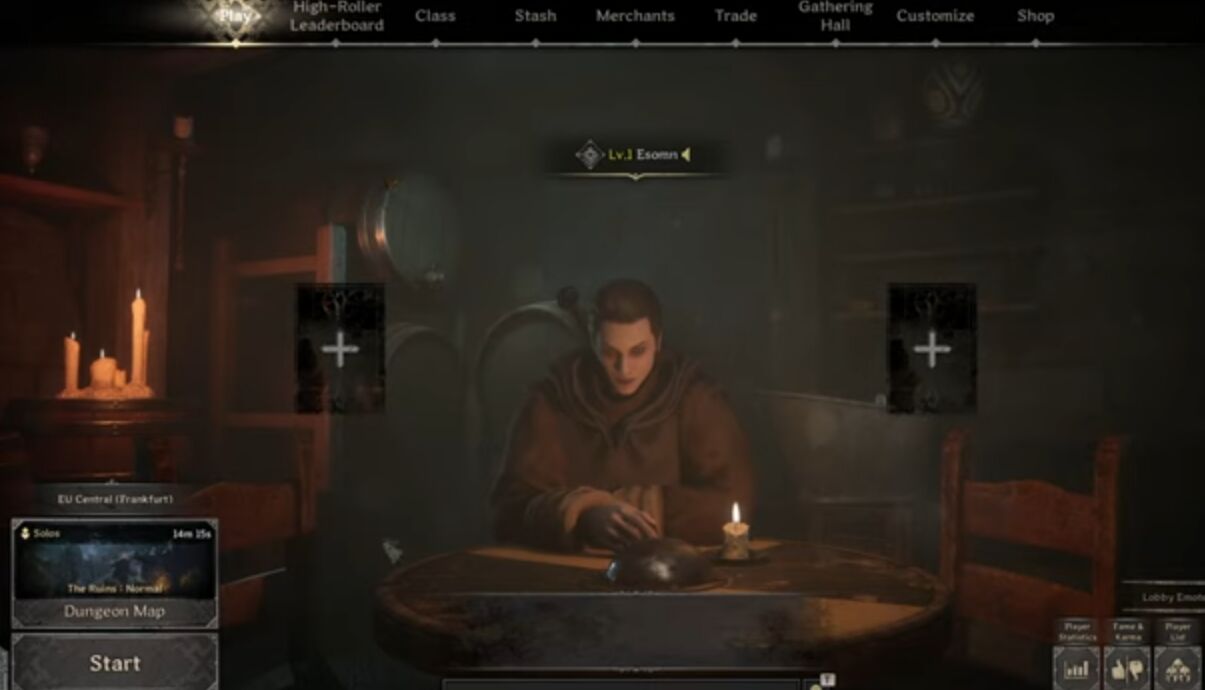
    Throne and Liberty: The Pay-to-Win Dynamics

    In the expansive universe of fantasy RPGs, Throne and Liberty emerges as a NextGen experience, captivating players on PC, Android, and iOS. As you embark on this fantastical journey, you are greeted by the lush lands of Tiia, promising a blend of relaxation and excitement. The game boasts high-quality 3D models, stunning visuals, and a diverse collection of Heroes, each with unique attributes. The allure of 360° real-time operational battlefields awaits, demanding strategic mastery and impeccable timing in short, exhilarating encounters lasting 2 to 3 minutes.

    Throne and Liberty commit to a time-saving and user-friendly hero development system, offering players many powerful Heroes in the early stages, free of charge. The festive season introduces a Christmas event, allowing players to obtain a new legendary hero and skin through daily logins. Additionally, a competitive event between two camps, influenced by prominent gamers, offers players the chance to reap rewards by choosing a side and participating. To join the adventure, players can download Throne and Liberty using the provided QR code or the link in the description.

    Now, let’s delve into the intricate world of currencies within Throne and Liberty. Lucent and Solent take center stage as the primary currencies shaping the economic landscape of the game. Lucent, purchasable with real money, plays a pivotal role in the Auction House, referred to as the Marketplace. Here, players can acquire base-level gear and essential recipes for crafting specific sets. The gear materials available for purchase in the Marketplace are only part of the equation, as farming in-game becomes a necessity for obtaining the majority of required materials.

    Solent, on the other hand, acts as a secondary currency required for upgrades and crafting. The intricate process involves transferring experience from one piece of gear to another, demanding a significant investment of 300,000 Solent. This bottleneck prevents players from swiftly advancing to full purple gear, highlighting a balance between pay-to-win and the importance of in-game efforts.

    The cash shop introduces Crean, a currency used exclusively for the battle pass, growth pass, and costume packages. While these items offer advantages, they don’t directly impact gear progression. The pay-to-progress and pay-to-win aspects arise when purchasing Lucent and gear. Notably, the ability to buy gear doesn’t guarantee instant dominance, as the subsequent upgrading process involves farming untradeable growth stones and the use of Solent.

    The death mechanic in Throne and Liberty introduces an intriguing twist. Upon dying, players accumulate a death penalty stack, reducing damage and movement speed by 10% for every 20 deaths. To alleviate this penalty, players can spend Solent. This system adds a layer of consequences to deaths and influences strategic decisions during battles.

    Throne and Liberty Lucent, initially perceived as a premium currency, functions more like in-game gold. Tradable items, such as gear drops, can be sold for Lucent, providing players with a means to acquire the currency without direct investment. The game’s economic system encourages active guild participation, offering additional avenues to earn both Lucent and Solent. It’s 100% safe to buy TL Lucent and Items from mmoexp.com.

    As the game progresses, the importance of traits becomes evident. The endgame loop likely revolves around min-maxing these traits, requiring an identical copy of an item to transfer traits effectively. This introduces a potential pay-to-win scenario, where players with the means to purchase specific traits on the Auction House gain a significant advantage in optimizing their gear.

    Despite concerns about pay-to-win dynamics, the game’s current state suggests a balanced approach. Real-time rankings reveal the dominance of free-to-play players in both activity and kill rankings. Guilds led by free-to-play players hold the top positions, challenging preconceived notions about the necessity of heavy spending for success.

    In conclusion, Throne and Liberty presents a nuanced landscape, where pay-to-win elements coexist with opportunities for free-to-play players to thrive. The game’s evolving dynamics and endgame challenges will ultimately determine the extent of its pay-to-win nature. As players continue to explore the realms of Tiia, the true impact of economic systems and progression mechanics will become clearer, shaping the legacy of Throne and Liberty.

  • New World – Requesting AGS to address the balance of healers in PvP

    New World – Requesting AGS to address the balance of healers in PvP

    An uneven distribution of healers between teams results in a near-certain loss about 90% of the time in Outpost Rush (OPR) and Arena matches. This scenario can be quite frustrating for those not part of a premade duo or a 5-stack group benefiting from their dedicated healer. AGS, we implore you to take action regarding the healer situation.

    The state of healing in Arena is far from balanced. It necessitates anti-healing abilities and an excessive level of coordination within a team to eliminate a player who seems to only press two buttons repeatedly.

    In general, healing dramatically alters the pace of games. For instance, World of Warcraft has been dominated by the unchanging combination of 2 DPS and a Healer for years, making it somewhat dull.

    -Yes, it requires skill.
    -Yes, it adds depth.

    But it has transformed the game into something it wasn’t intended to be when healers are absent. The presence of healers in games often means you don’t need to learn from your mistakes, at least not the glaring ones and need more New World Coins. Made a positioning error and took a headshot or a fireball to the face? Not a big deal, a short cooldown heal just erased all that damage!

    Suddenly, every game balance update assumes that everyone is playing with 2 DPS and 1 Healer. Everything in the game becomes balanced around this setup, and every Arena match lasts a mere 5 minutes. This isn’t what I want. I’ve experienced it from both sides, as a Healer and as a DPS.

    Until they address the synergy between “shirking heals” and “ankh,” healers are the least of our problems.

    To assess if “shirking heals” + “ankh” is overpowered, you should not compare it to “shirking heals” + “ankh” + a healer. Instead, compare it to “shirking heals” alone and to having no healing support at all.

    In this context, you should ask whether “shirking heals” + “ankh” is potent enough that someone with only “shirking heals” can still have a fighting chance and occasionally win (achieving a 30-50% win rate) compared to someone with this combo.

    You should also inquire if “shirking heals” alone is strong enough that someone with no healing abilities can still stand a chance and occasionally win (achieving a 30-50% win rate) compared to someone with it.

    If not having any of these abilities still results in a 50% win rate, that ability is essentially useless. Conversely, if not having any of these abilities leads to a win rate of less than 20%, that ability becomes nearly mandatory and creates a barrier for PvP against those without it. This is how we discern what is overpowered and what isn’t.

    It’s expected for players to optimize their builds to perform well in PvP; that’s normal. Your win rate increases with every adjustment, whether it’s slotting high-tier gems, using 700 Gear Score equipment, or choosing the right perk. However, if a single element significantly impacts win rates, it’s a sign that it might be overpowered.

    In their current forms, I believe that “shirking heals” + “ankh” and “shirking heals” both fall into this category when compared to having no healing abilities. They do enhance the health and dynamism of PvP (boosting light armor mobility builds, which I appreciate), but they should be adjusted to be less overpowering or more accessible, granting those without healing abilities a fair chance to survive and adapt.

    Those who don’t recognize this and believe these elements are perfectly balanced are likely reveling in their power and inaccessibility. You can change all that with New World gold coins.